

representing a new compilation from FLEE
Upon their arrival in Brazil after a traumatic Atlantic crossing, enslaved populations from West Africa sought to reconstruct their sacred cultural and spiritual systems within a hostile environment. Five centuries later, the activity of terreiros (ritual grounds) across the country bears witness to an ever-evolving and adaptive religion, one that is celebrated in Brazil and increasingly recognized internationally far beyond Afro-descendant communities.
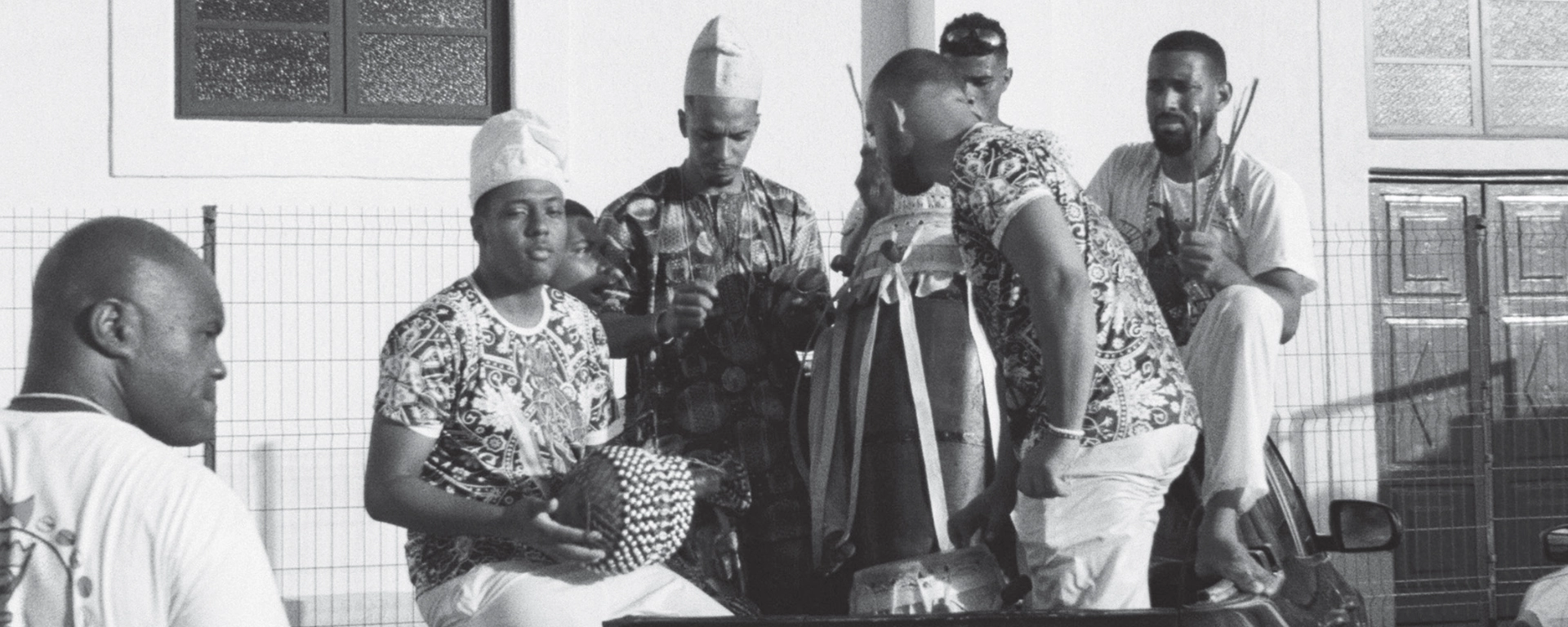
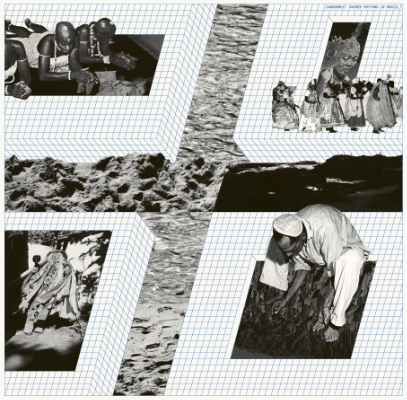
The project Candomblé: Sacred Rhythms in Brazil, articulated around the publication of a book and a double LP, seeks to honour this tradition by documenting its past while critically and artistically reflecting on its present transformations and future possibilities. The compilation draws on exclusive field recordings made in 1985 and 1988 at Ilê Axé Opô Aganjú, a Candomblé terreiro in the region of Salvador, alongside newly commissioned works by contemporary sound artists and musicians such as DJ Anderson do Paraíso, XEXA and Felinto, who revisit and reinterpret these sonic legacies. Accompanying the double LP, a bilingual book (English–Portuguese) gathers essays, artistic commissions and rare photographic archives by the late Pierre Verger. Through these materials, the project documents the history of Candomblé from the perspective of initiated practitioners and ceremonial musicians, while also incorporating contributions from researchers and anthropologists who seek to demystify the religion and illuminate the domestic and international power dynamics and political stakes that surround it. Candomblé now circulates globally; with the emergence of new dematerialized forms of communication and cultural transmission, the religion and its many variations have become the object of renewed attention and contestation, far beyond Brazil, with emerging actors, claiming legitimacy and authority over its origins and practices. In this context, the project brings together multiple, and sometimes divergent, perspectives on a living and constantly evolving religion, inviting artists to enter into dialogue with Candomblé’s cosmology and with the voices of ritual practitioners and scholars, in order to offer rich and nuanced understanding of its past, present and possible futures.
About the field recordings
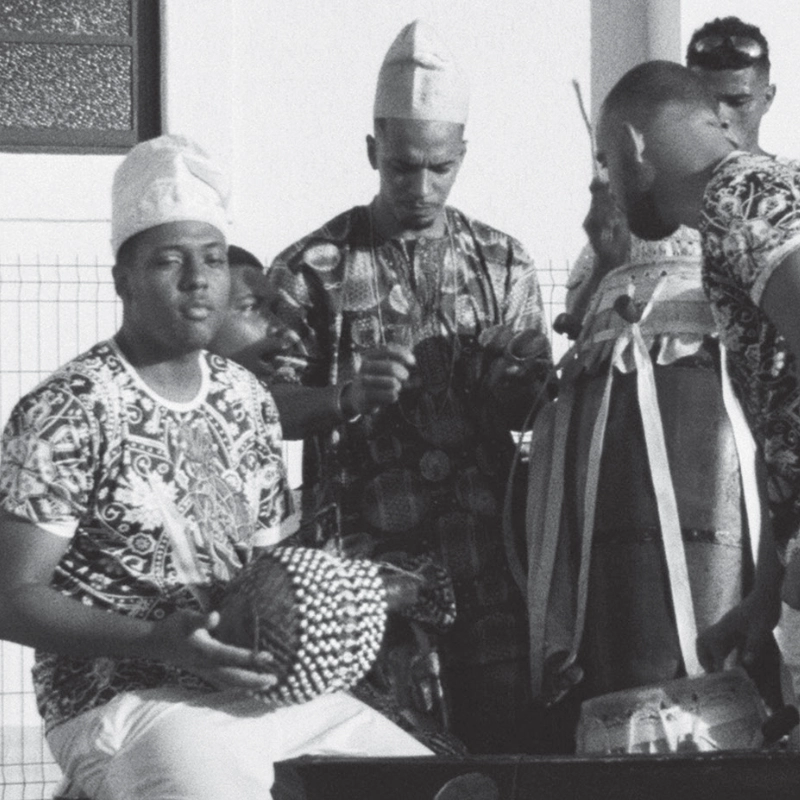
The field recordings were made by ethnomusicologist Angela Lühning in 1985 and 1988 at Ilê Axé Opô Aganjú, a Candomblé terreiro in Lauro de Freitas, in the metropolitan region of Salvador, Bahia, when the house was led by the babalorixá Obaray (Balbino Daniel de Paula). The performances feature ogãs and alabês, initiated ritual musicians who play the atabaques (rum, rumpi, and lê), whose drumming structures the xirê, the ceremonial sequence through which the orixás are honoured.